Automate a Restaurant Map, Rooms, and Kitchen Zones
Learn the real floors of your shared restaurant so drones walk short, useful paths.
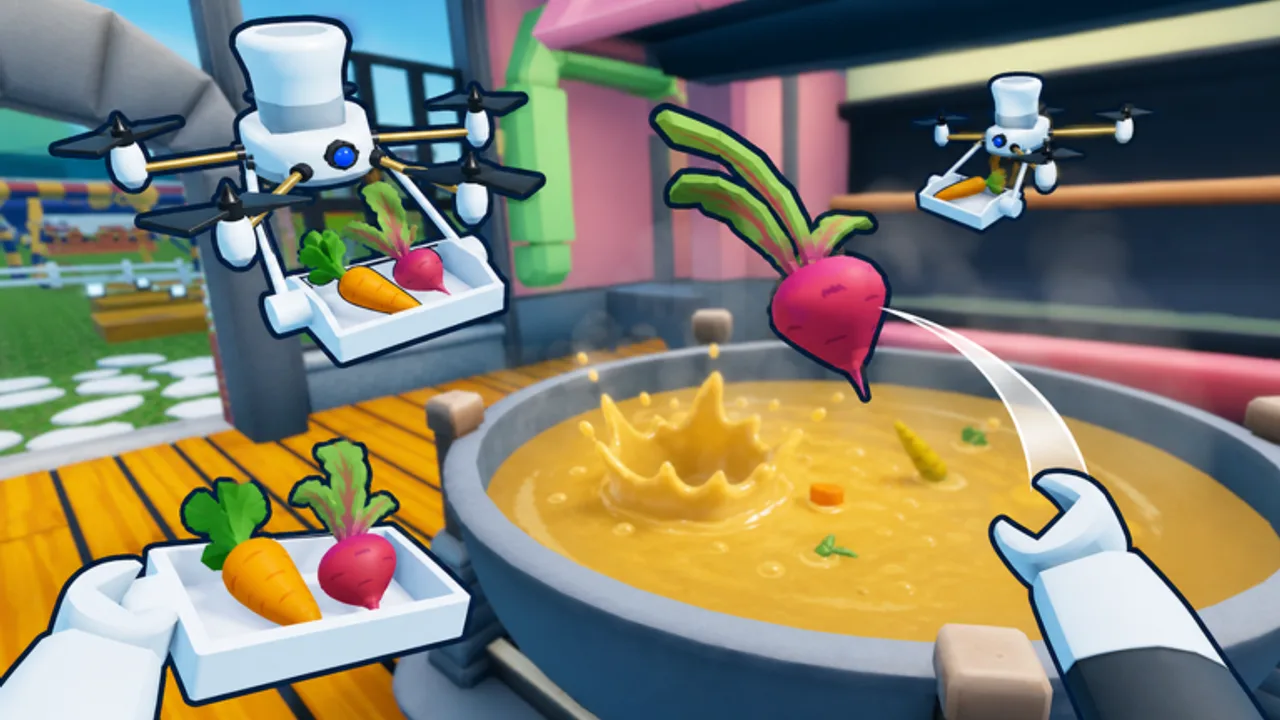
Automate a Restaurant does not ship a tourist-style overworld map with named biomes. The “map” players search for is the kitchen they build: farm surfaces, backyard land, storage, cook stations, and a serve front. This page names those zones so you can talk with co-op partners and so layout advice has somewhere to point. The experience is a Roblox incremental sim from m_experiment (released May 25, 2026, max 10 players on one shared restaurant).
We will not draw a fake labeled screenshot atlas. Zone names below match systems you actually click: beds, pots, cells, lever, storage, experiment, drone dock, counter.
Farm zone — beds and pots
Starter beds are your first real estate. Pots are extra plant surfaces, not a different planet. Both eat seeds and both need harvests. Treat them as one farm zone with two fixture types. Details: Seeds and Beds and Farm Crops.
Place this zone where a harvest drone can loop without crossing the dining room. If a guest path cuts through soil, you will grief your own tickets.
Backyard zone — cells
Backyard cells are purchasable land tiles you upgrade. They exist so the farm can grow after the tutorial plot is full. They are not automatically planted. Buying a cell and walking away is how people go broke (Backyard Cells, How to Make Money). Keep new cells adjacent to the existing farm loop so you do not create an island field.
Storage and lever zone
The lever and storage are the factory gate between “grown” and “usable.” Put them on the shortest path from harvest to cook. If storage sits behind the serve counter, drones and humans both clog the money step. Mechanic page: Storage and Lever.
Experiment station
Recipe discovery lives at the experiment interface. It should be reachable without abandoning a rush, but it should not sit in the serve lane. Players who experiment at the counter drop tickets. Use Discover Recipes here; walk back to Serve Customers when a queue forms.
Cook cluster
Cooking stations belong in a tight cluster facing storage on one side and the counter on the other. That is the whole production-line idea. Production Line Layout is the deep page; this zone note is: do not scatter stoves to decorate.
Serve front
The counter is where tickets die or pay. Face it toward customer spawn if the place gives you a visible queue. Keep crates off that tile. A serve drone needs a clean last mile (Drone Priority).
Drone dock
Unlock and upgrade workers near the role they perform, or accept that they will path across the plot. After the August 22, 2026 Roblox update, re-walk docks once—pathing is the first thing a silent patch breaks. Unlock Drones.
Co-op callouts
Agree on names: “I’m on farm,” “I’m on lever,” “I’ve got counter.” Invented poetry (“the west garden of dreams”) wastes a 10-player lobby. Co-op Shared Restaurant covers etiquette; this page is the vocabulary.
What this map is not
- Not a Trello board of rooms—see Trello.
- Not a copy of Run a Restaurant floor stacks and themes.
- Not a world map with rare-spawn pins we cannot verify. Rare hunts stay on Rare Ingredients until official notes name a location.
Walk the zones in order every session: farm → lever/storage → cook → serve. That circuit is the map. Expand backyard only when the circuit is already short.
Related pages
Frequently Asked Questions
Quick answers to the most common questions.
Is there an official Automate a Restaurant map?
No public overworld atlas is verified. Your map is the kitchen zones you place: farm, backyard, storage, cook, and serve.
Where should I put new backyard cells?
Against the existing harvest loop so drones do not cross the dining room to reach one extra tile.
Where do rare ingredients spawn?
This wiki does not invent pin locations. Use Rare Ingredients for hunt habits and wait for official notes before trusting lobby rumors.
Why do my drones take a long path?
A zone is in the way—usually storage behind the counter or beds in the serve lane. Rebuild a straight harvest-cook-serve line.